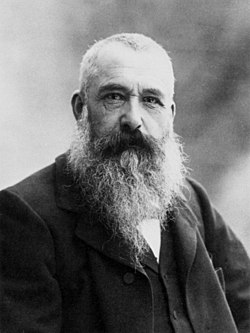

Claude Monet (1840–1926) was a founder and central figure of French Impressionism, known for his philosophy of capturing fleeting light and color outdoors (plein air). Born in Paris and raised in Le Havre, he was introduced to plein air painting by Eugène Boudin. Monet’s 1872 painting Impression, Sunrise gave the movement its name. He later moved to Giverny in 1883, where he cultivated his famous garden and painted numerous series on subjects like haystacks and his water lilies, transforming landscape painting.
Early Life & Influences
-
Birth and Childhood:Claude Monet was born in Paris in 1840 and spent his childhood in Le Havre, Normandy.
-
Introduction to Art:As a teenager, he gained local fame for his charcoal caricatures. Landscape artist Eugène Boudin encouraged him to try painting outdoors, a practice called plein air.
-
Paris and Fellow Artists:Monet moved to Paris to study, where he met and befriended fellow artists like Pierre-Auguste Renoir and Alfred Sisley. He was also influenced by Édouard Manet in his figure compositions.
The Rise of Impressionism
-
Salon des Refusés:Despite some early success exhibiting at the official Paris Salon, many of Monet’s radical works were rejected. He and other like-minded artists held their own exhibitions, with his 1874 painting Impression, Sunrise leading to the name of the Impressionist movement.
-
Key Themes:Monet’s work focused on capturing his perception of nature, particularly the effects of shifting light and atmosphere, using quick brushstrokes and a vibrant palette made more accessible by new paint tube technology.
Later Career & Giverny
- Giverny: In 1883, Monet moved to Giverny, a small town northwest of Paris.
- Series Paintings: At Giverny, he developed his famous series paintings, such as the haystacks, poplars, and especially the iconic water lilies from his own garden.
- Legacy: Monet continued to paint through his final years, leaving behind a vast body of work that transformed the possibilities of landscape painting and solidified his place as a father of modern art.
Leave a Reply